The Enneagram is an ancient symbol and system that has been around for centuries, with roots in various spiritual traditions. It originated in the Middle East and was later developed by various spiritual teachers and mystics.
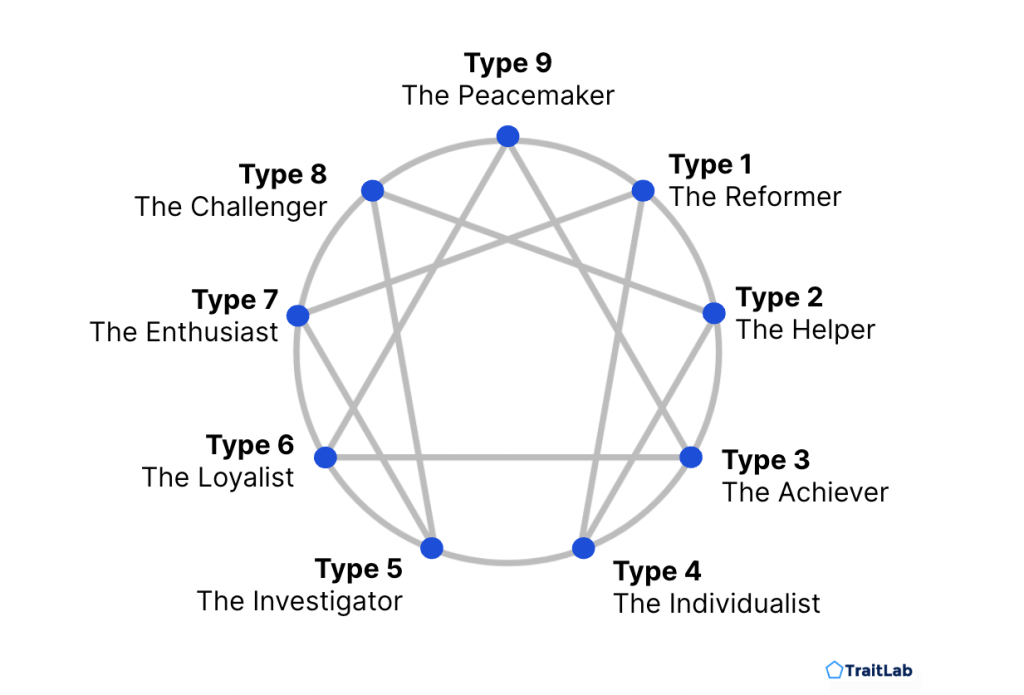
The Enneagram became more widely known in the West in the 20th century through the work of various teachers and authors who brought it to a broader audience. One of the key figures in popularising the Enneagram in the West was George Gurdjieff, a mystic and spiritual teacher who integrated the Enneagram into his teachings on self-awareness and personal development.
In the 1970s and 1980s, the Enneagram gained popularity in the West through the work of Oscar Ichazo and Claudio Naranjo, who further developed the system and its psychological applications. It was during this time that the Enneagram started to be used as a tool for understanding personality types and patterns of behaviour.
I have always identified with the Socratic dictum that ‘the unexamined life is not worth living’ and remember my excitement at coming across this system in the late eighties in a book called ‘Using the Enneagram for Self Discovery’ by Don Richard Riso. Ever since I have been convinced of its merits, finding it a valuable tool for spiritual and personal development. A more recent title which has even more applications and uses the heart centres too, is Beatrice Chestnut’s ‘The Complete Enneagram.’
Integral Theory, developed by philosopher Ken Wilber, incorporates the Enneagram as a tool for understanding human development and consciousness. The Enneagram is seen as a valuable framework for exploring different aspects of the self, including personality traits, motivations, and potential growth paths. By integrating the Enneagram into Integral Theory, practitioners can gain a deeper understanding of themselves and others, leading to greater self-awareness and personal growth.
In tomorrow’s post we delve deeper into the types and how they can give us insight into self- discovery.
 Integral Wisdom Activist
Leave a comment